MULCHED IN PLACE
Brush and saplings are ground where they stand.

GOT A PART OF YOUR PROPERTY THAT HAS GROWN IN?
Open back up the field edge, fence line, trail, or wooded ground that brush and saplings have taken over.
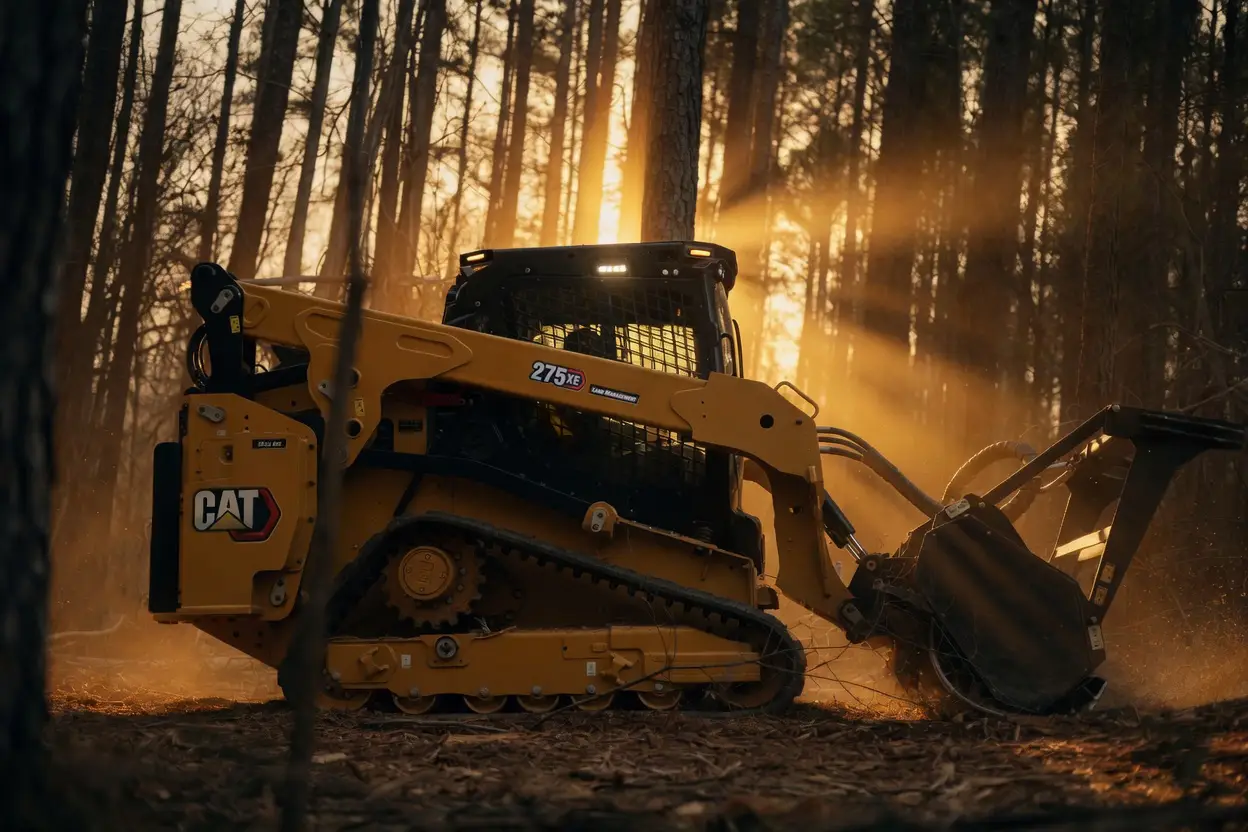
Forestry mulching grinds brush, saplings, buckthorn, and small woody growth in place instead of leaving burn piles, brush piles, or hauled-off debris. The mulch layer left behind gives you cleaner sightlines, better access, and land that is easier to walk, maintain, and use.
Based in Coleman, Wisconsin and serving rural landowners across Northeast Wisconsin.
Brush and saplings are ground where they stand.
The mulched material stays on the ground instead of becoming a brush pile.
Brush can be removed without digging up or grading the whole area.
The owner walks the property, writes the quote, and performs the work.
THE PART THAT KEEPS GROWING IN
It usually starts at an edge. Brush creeps farther into the field, saplings grow through the fence line, or the path through the woods gets narrower each year. Eventually, a part of the property that used to be open becomes hard to walk, mow, fence, or use.
Forestry mulching opens that ground back up by grinding the brush and small woody growth where it stands. Larger trees you want to keep can often remain while the thick lower growth is removed from around them.
DOES THIS SOUND LIKE YOUR PLACE?
Forestry mulching is for brush, saplings, vines, buckthorn, and small woody growth that a mower or hand tools are not built to handle efficiently.
Open the part of your property that has become too thick to walk, see through, or use.
Push back brush and saplings that keep creeping farther into open ground.
Open grown-in boundaries so they are easier to reach, see, fence, and maintain.
Remove thick lower growth while working around mature trees you want to keep where practical.
Reopen routes that brush and saplings have narrowed or grown shut.
WHY MULCHING WORKS
Cutting brush by hand is only the first part. It still has to be dragged, piled, burned, chipped, or hauled. A forestry mulcher handles the cutting and processing in one pass, leaving the material spread over the ground as mulch.
See the field edge, fence line, and mature trees instead of a solid wall of brush.
Cut vegetation becomes ground cover instead of a pile that needs to be burned or hauled away.
Once you can reach the area again, it is easier to mow, monitor, spray, or maintain.
WHAT THIS SERVICE IS BUILT FOR
Forestry mulching works best where there is room for equipment and the problem is brush, saplings, buckthorn, field or pasture edges, fence lines, trails, or wooded understory.
Mature tree removal, storm debris, junk hauling, stump pulling, grading, excavation, building pads, commercial logging, and tight backyard work usually need a different contractor. Soft, low, wet, swamp, or shoreland ground needs an in-person look before the work can be planned responsibly.
PROCESS
Step 1
Call or use the quote form with the property location, what part has grown in, and what you want to be able to do there again. A picture or parcel pin can help when already available, but is not required to start.
Step 2
An in-person site walk confirms access, ground conditions, vegetation, hidden obstacles, and the finished result you want.
Step 3
After the site walk, you receive a written quote that defines what will be opened up and what is included. The calculator is only for rough planning; final pricing follows the in-person site walk.
Pricing without the runaround
The Instant Calculator gives you a realistic planning range based on acreage, brush density, terrain, access, and travel. It is not a final quote — it helps you see whether the job is in the right ballpark before we schedule a site walk.
Need a rough planning number? Use the Instant Price Calculator.
Starting at
$1,200
Larger, denser, rougher, or more remote jobs can price higher. Official written quotes are confirmed after an in-person site walk, access check, and confirmed scope.
PLAIN LANGUAGE
Landowners describe this work a lot of different ways: clearing small trees, cutting back thorny brush, opening up woods, cleaning up underbrush, removing buckthorn, pushing back field edges, clearing vines, opening fence lines, or making land walkable again.
If the problem is brush, saplings, buckthorn, vines, or thick lower growth with enough room for equipment, forestry mulching may be the right tool. Large tree removal, stump pulling, excavation, grading, and tight backyard work usually need a different contractor. Soft, low, wet, or shoreland areas need to be looked at in person before I say what can realistically be done.
FAQ
Forestry mulching grinds brush, saplings, vines, buckthorn, and small trees into mulch where they stand. The material stays on site instead of being piled, burned, or hauled away.
The best projects are overgrown parts of rural property, field and pasture edges, fence lines, buckthorn, wooded understory, trails, and access routes where there is room for equipment.
Yes, in many projects the goal is to clear the lower brush and understory while keeping desirable mature trees in place.
No. Forestry mulching can cut some small stumps close to grade, but it does not pull root systems, grade soil, install driveways, or prepare finished building pads.
Call or use the quote form with the property location and a description of what you want opened up. A picture or parcel pin can help when already available, but is not required to start. If forestry mulching appears appropriate, the property is walked before a final written quote is provided.
You do not need to know the service name. Describe whether the woods are too thick to walk, a field edge is growing in, a fence line has disappeared, or brush and saplings have taken over part of the property. A site walk can determine whether the ground, access, and vegetation are suitable for forestry mulching.
READY TO RECLAIM YOUR PROPERTY?
Share the property location and describe what part has become hard to walk, maintain, or use. If forestry mulching is the right tool for the ground and access, the next step is an in-person site walk followed by a clear written quote.