FIELD EDGES OPENED
Reclaim ground that brush has slowly taken back.

FENCE LINE AND FIELD EDGE CLEARING
Brush, saplings, buckthorn, and vines can bury a fence row, creep into a field edge, and make old pasture margins harder to mow, fence, and maintain.
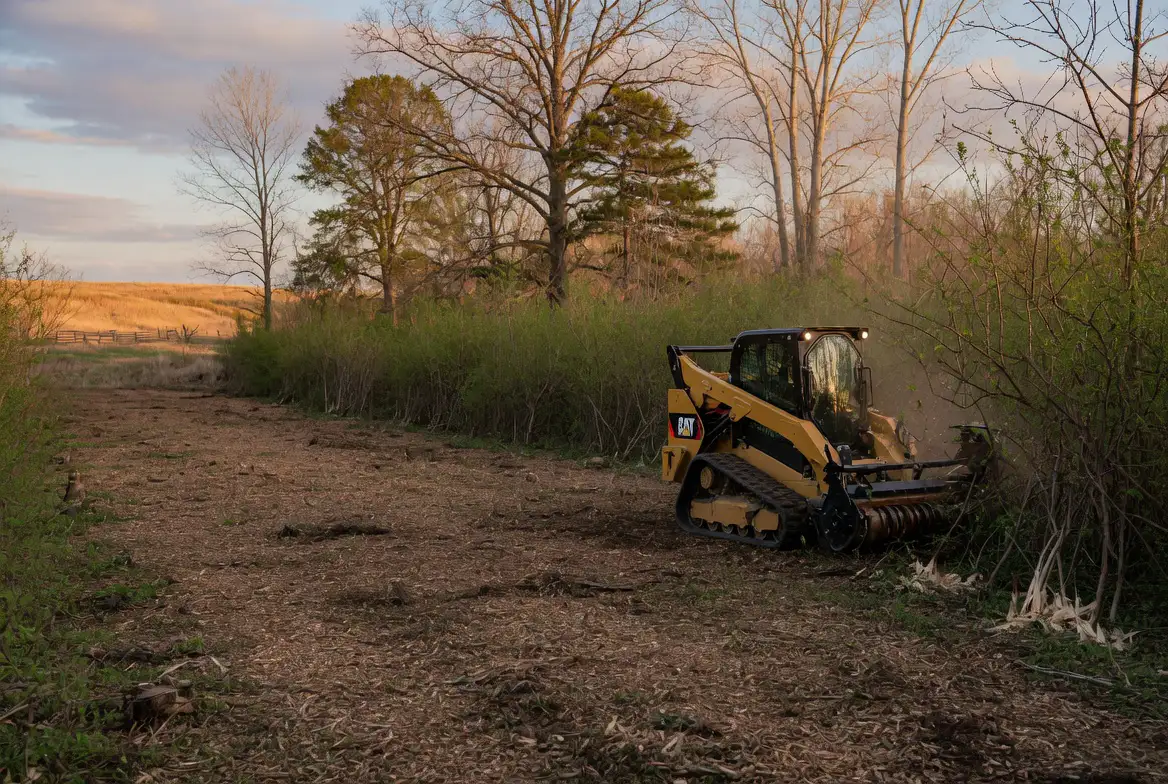
Forestry mulching grinds brush, saplings, buckthorn, vines, and small woody growth in place instead of leaving burn piles, brush piles, or hauled-off debris. The mulch layer left behind gives you cleaner sightlines, better access, and edges that are easier to mow, fence, inspect, and maintain.
Based in Coleman, Wisconsin and serving rural landowners across Northeast Wisconsin.
Reclaim ground that brush has slowly taken back.
Make boundaries easier to see, access, and maintain.
Brush is processed on site without burn piles or hauling.
The owner who walks and quotes the project also performs the work.
RECLAIM THE EDGES
Most overgrown properties start at the margins. A few saplings come up along a fence row. Buckthorn fills in around the woods. Brush creeps into an old pasture corner. The mower stops reaching the edge, and before long the boundary is buried.
Forestry mulching gives those edges a reset by cutting and grinding brush, saplings, vines, and invasive growth into mulch where it stands. The result is a cleaner edge that is easier to walk, inspect, mow, fence, and maintain.
COMMON PROJECTS
Forestry mulching fills the gap when brush and saplings are too thick to mow but the property does not need excavation or grading.
Open buried fence rows so posts, wire, gates, and boundaries are easier to see and reach.
Push back brush and saplings that have crept into open ground.
Reclaim pasture corners, brushy margins, and neglected edges that are too thick to mow.
Create cleaner access along rural boundaries without turning the project into full excavation.
Open paddock edges, lanes, corners, and grown-in areas around small farms and rural homes.
WHY MULCHING WORKS
Fence lines and field edges need control, not a scraped-up jobsite. Forestry mulching clears the woody overgrowth and leaves the material on site as mulch. You get better visibility, cleaner access, and an edge that is easier to mow, spray, fence, or maintain.
Open space for walking, checking fence, marking boundaries, and maintaining the edge.
See across field edges, down fence rows, and into areas that were previously closed in.
Once the edge is opened, it is easier to mow, monitor, spray, or keep from closing back in.
WHAT THIS SERVICE IS BUILT FOR
The best fence line and field edge projects are dry, accessible, and focused on brush, saplings, buckthorn, and overgrowth. Property lines, gates, corners, and areas to avoid should be clearly marked before work begins.
Common projects include field-edge, fence-row, and old pasture work around Abrams, Pulaski, Oconto Falls, and Peshtigo.
Some projects need a different approach. Wet ditches, swamp, wetland, and shoreland areas need a closer look before equipment is scheduled. Mature tree removal, stump pulling, grading, excavation, fence installation, and tight residential work usually need a different contractor.
PLAIN LANGUAGE
You do not need to know whether to call it fence line clearing, field edge clearing, or pasture reclamation. The useful details are what has grown in, where the edge used to be, and what you need to reach, mow, fence, or maintain again.
That is exactly where forestry mulching can make sense. It opens dry, accessible edges by cutting brush, saplings, vines, and buckthorn in place. The goal is not to scrape the land bare. The goal is to make the edge visible, walkable, maintainable, and easier to fence, mow, spray, or inspect.
Soft or wet ditches and swampy areas should be mentioned when requesting a quote because ground conditions need to be evaluated before equipment is scheduled. Mature tree removal, stump pulling, grading, excavation, and fence installation are different jobs.
PROCESS
Step 1
Call or use the quote form with the property location and a short description of the fence line, field edge, or pasture margin you want opened. A photo, parcel map, or pin can help when already available, but is not required to start.
Step 2
An in-person site walk confirms access, boundaries, ground conditions, vegetation, hidden obstacles, and the finished result you want.
Step 3
After the site walk, you receive a written quote with the scope clearly defined. The calculator can help with rough planning, but final pricing comes after the property is walked in person.
Pricing without the runaround
The Instant Calculator gives you a realistic planning range based on acreage, brush density, terrain, access, and travel. It is not a final quote — it helps you see whether the job is in the right ballpark before we schedule a site walk.
Need a rough planning number? Use the Instant Price Calculator.
Starting at
$1,200
Larger, denser, rougher, or more remote jobs can price higher. Official written quotes are confirmed after an in-person site walk, access check, and confirmed scope.
FAQ
Fence line clearing uses a forestry mulcher to grind brush, saplings, vines, buckthorn, and overgrowth along a fence row or property line. The material is mulched in place instead of being piled, burned, or hauled away.
Often, yes, but it depends on access, wire location, posts, terrain, and how much material is wrapped into the fence. Old wire, loose fencing, rocks, and hidden debris are reviewed during the site walk.
Yes. Property lines, gates, corners, trees to keep, and areas to avoid should be clearly marked before work begins. A survey, parcel map, pin location, or marked boundary helps keep the scope clear.
No. Truax Land Clearing clears brush and overgrowth so fence lines are easier to access and maintain. Fence installation, wire stretching, post replacement, and fence repair require a fencing contractor.
Yes, when the ground is dry, accessible, and covered in brush, saplings, or invasive growth. Forestry mulching can open the area and make future mowing, spraying, seeding, or maintenance easier.
Call or use the quote form with the property location and a short description of the fence line, field edge, or pasture margin you want opened. A photo, parcel map, or pin can help when already available, but is not required to start. Final written pricing comes after the site is walked in person.
READY TO RECLAIM YOUR FENCE LINES OR FIELD EDGES?
Share the property location and describe the fence line, field edge, or pasture margin you want opened. If forestry mulching is the right tool for the ground and access, the next step is an in-person site walk followed by a clear written quote.