DENSE BRUSH OPENED
Turn tangled understory into walkable ground.

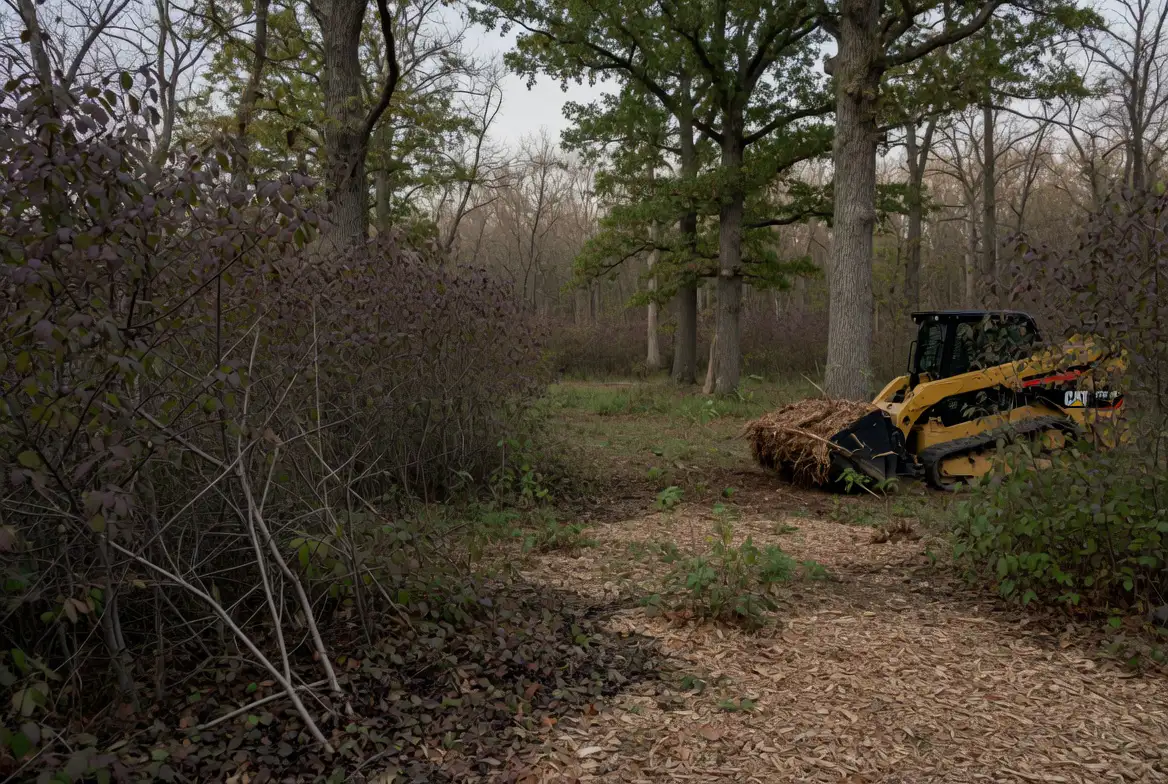
BUCKTHORN AND INVASIVE BRUSH MULCHING
Open up thick buckthorn, brush, saplings, and invasive understory so your land is easier to walk, see, maintain, and use.
Buckthorn can turn woods, field edges, fence lines, and rural acreage into a wall of tangled growth. Forestry mulching grinds buckthorn, saplings, and invasive brush in place and leaves the material as mulch. The result is better sightlines, easier access, and ground that is easier to walk, maintain, and use without burn piles or routine brush hauling.
Based in Coleman, Wisconsin and serving invasive brush projects on firm, accessible ground across Northeast Wisconsin.
Turn tangled understory into walkable ground.
Brush is processed on site without burn piles or hauling.
Clear the lower growth while working around desirable trees where possible.
The owner who walks and quotes the project also performs the work.
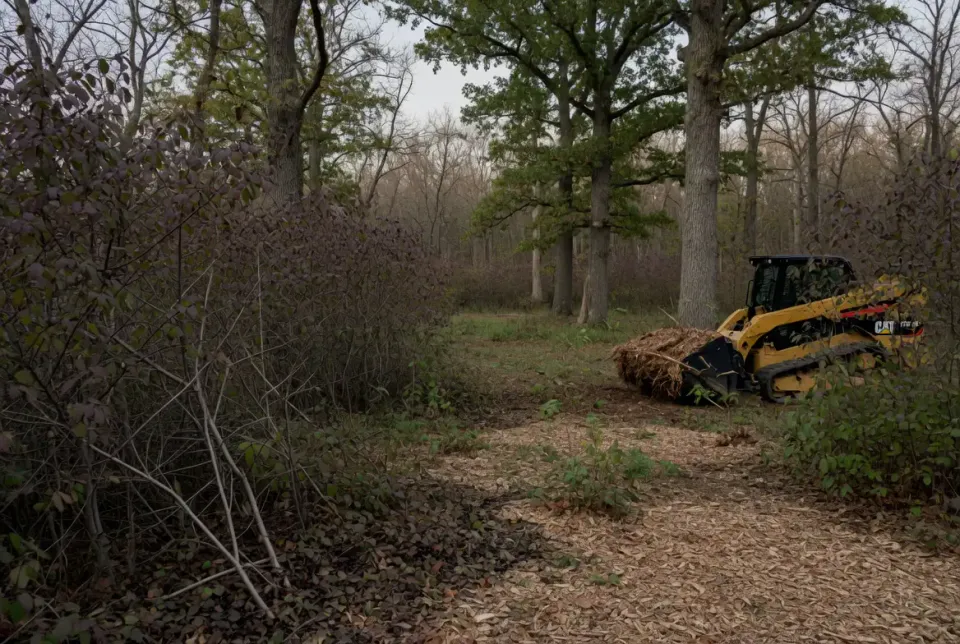
RECLAIM THE UNDERSTORY
Buckthorn does not just make a property look messy. It changes how the land feels. Woods become dark and tangled. Field edges close in. Trails disappear. Fence lines get buried. You stop walking certain parts of the property because getting through them is more trouble than it is worth.
Forestry mulching gives that ground a major reset. The mulcher grinds buckthorn, saplings, vines, and invasive brush into mulch where they stand. Instead of dragging piles, burning brush, or trying to cut everything by hand, forestry mulching opens the understory so the area becomes visible, walkable, and easier to maintain.
The goal is not to scrape the land bare. The goal is to open the ground and make future management realistic.
COMMON PROJECTS
This service is best for properties with firm access where invasive brush has taken over the lower growth. It works especially well when the goal is to open the understory while keeping desirable mature trees in place.
Open thick lower growth beneath mature trees so the woods are easier to walk and manage.
Push back buckthorn, brush, and saplings where open ground is slowly turning into thicket.
Clear invasive growth that hides boundaries, blocks access, and makes maintenance harder.
Open dry access routes through overgrown areas without leaving brush piles behind.
Open neglected corners, wooded edges, and brushy areas around rural acreage and hobby farms.
WHY MULCHING WORKS
Dense buckthorn is slow, frustrating work by hand. A forestry mulcher changes the scale of the job by processing the brush where it stands and leaving a mulch layer behind.
Buckthorn is persistent, so that first heavy knockdown should be treated as a reset, not a permanent one-time cure. Once the area is open, follow-up mowing, cutting, treatment, monitoring, or seasonal maintenance becomes more realistic.
See into the woods, across field edges, and along property lines that were previously closed in.
Walk, mow, monitor, and maintain areas that were too thick to move through comfortably.
Material is mulched in place instead of being dragged, piled, burned, or hauled away.
In many projects, the lower brush can be removed while desirable mature trees remain.
WHAT THIS SERVICE IS BUILT FOR
The best buckthorn and invasive brush projects have firm access, enough room to work, and a clear objective: open the understory, reclaim an edge, improve access, or make the property easier to maintain. Forestry mulching is built for dense lower growth and light-to-medium woody material on firm, accessible ground.
PLAIN LANGUAGE
You do not need to identify every plant before asking about the work. Landowners usually describe buckthorn and invasive brush as thorny brush, pokey little trees, vines, tangled undergrowth, woods too thick to walk through, or field edges that keep growing in.
If the problem is dense lower growth on firm ground with room to work, forestry mulching may be a good way to reset the area. It can knock back buckthorn, saplings, vines, and invasive brush while working around desirable mature trees where practical.
Buckthorn mulching is not a permanent one-time cure. It is a heavy mechanical reset that makes follow-up mowing, cutting, monitoring, or treatment more realistic.
Wet, swampy, or shoreland ground and areas with large trees or mostly stumps must be evaluated in person. Some areas need a different approach or a different contractor.
REAL RESULTS
A finished invasive brush mulching job does not look like a manicured lawn. It looks like rural ground that has been opened up. Thick brush is gone. Sightlines are better. The mulch stays on site. You can usually walk the area right away and start deciding how to maintain it next.
PROCESS
Step 1
Call or use the quote form with the property location and a short description of what you want opened up. A photo, parcel map, or pin can help when already available, but is not required to start.
Step 2
An in-person site walk confirms access, ground conditions, vegetation, trees to preserve, obstacles, and the finished result you want.
Step 3
After the site walk, you receive a written quote with the scope clearly defined. The calculator can help with rough planning, but final pricing comes after the property is walked in person.
Pricing without the runaround
The Instant Calculator gives you a realistic planning range based on acreage, brush density, terrain, access, and travel. It is not a final quote — it helps you see whether the job is in the right ballpark before we schedule a site walk.
Need a rough planning number? Use the Instant Price Calculator.
Starting at
$1,200
Larger, denser, rougher, or more remote jobs can price higher. Official written quotes are confirmed after an in-person site walk, access check, and confirmed scope.
SERVICE AREA
Truax Land Clearing is based in Coleman, Wisconsin and serves buckthorn and invasive brush projects with firm access across nearby parts of Northeast Wisconsin. Common service areas include Green Bay, Suamico, Sobieski, Pulaski, Abrams, Oconto Falls, Lena, Gillett, Peshtigo, Crivitz, Lakewood, Coleman, Pound, and nearby rural communities.
RELATED SERVICES
FAQ
Yes. Forestry mulching is a strong way to knock back dense buckthorn and invasive brush on firm ground with room to work. It grinds the standing brush into mulch where it grows, opening the understory and making the area easier to walk and manage.
It can. Buckthorn is persistent, and regrowth can happen from cut stems, roots, seed in the soil, or nearby plants. Mulching is a major first reset, but long-term control often requires follow-up mowing, cutting, treatment, monitoring, or seasonal maintenance.
Often, yes. Many buckthorn projects are selective understory jobs where the goal is to remove invasive brush while keeping desirable mature trees in place. Trees to keep should be discussed and marked during the site walk.
Wetland buckthorn, soft lowland, swamp, cedar swamp, muck, and shoreland ground must be evaluated in person. Some edges may be workable with the right timing, but many of these areas need a different approach.
Call or use the quote form with the property location and a short description of the buckthorn or invasive brush you want opened up. A photo, parcel map, or pin can help when already available, but is not required to start. Final written pricing comes after the site is walked in person.
No. Forestry mulching is a strong first reset for dense buckthorn and invasive brush, but follow-up maintenance is often needed because roots, seeds, and regrowth can remain.
READY TO RECLAIM YOUR WOODS OR FIELD EDGES?
Share the property location and describe the buckthorn or invasive brush you want opened up. A site walk confirms access, ground conditions, trees to preserve, and scope before the final written quote.