
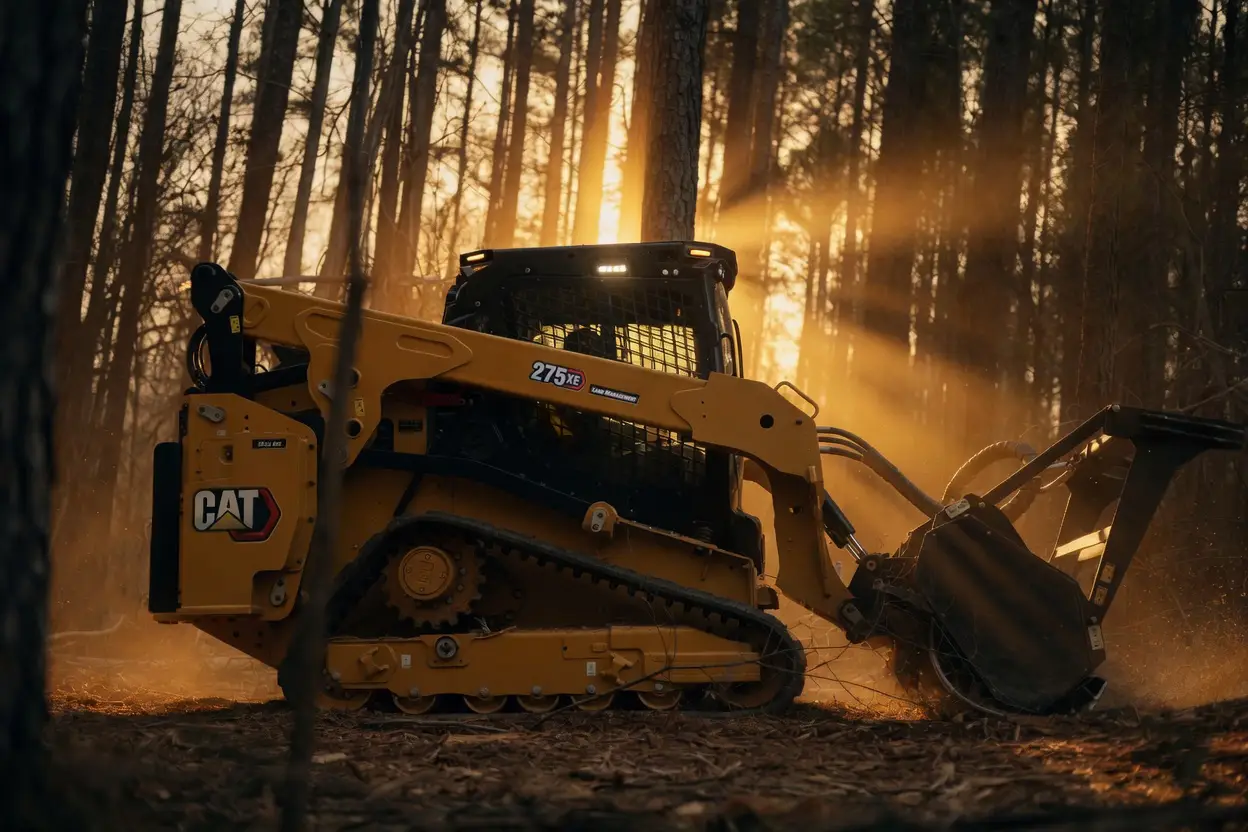
When land gets away from you
- Pasture edges creep inward
- Fence lines disappear behind brush
- Trails and access lanes close up
- Saplings and invasive underbrush take over
- Ground gets harder to walk, mow, hunt, or maintain
Wisconsin & East Texas Land Clearing
We turn overgrown brush, saplings, and invasive undergrowth into usable ground so you can walk your woods, see your fence lines, and use your property again.
Where we work
Choose the region where your property is located. Each side of the site explains the work I handle there, the areas I serve, and what to send for a quote.
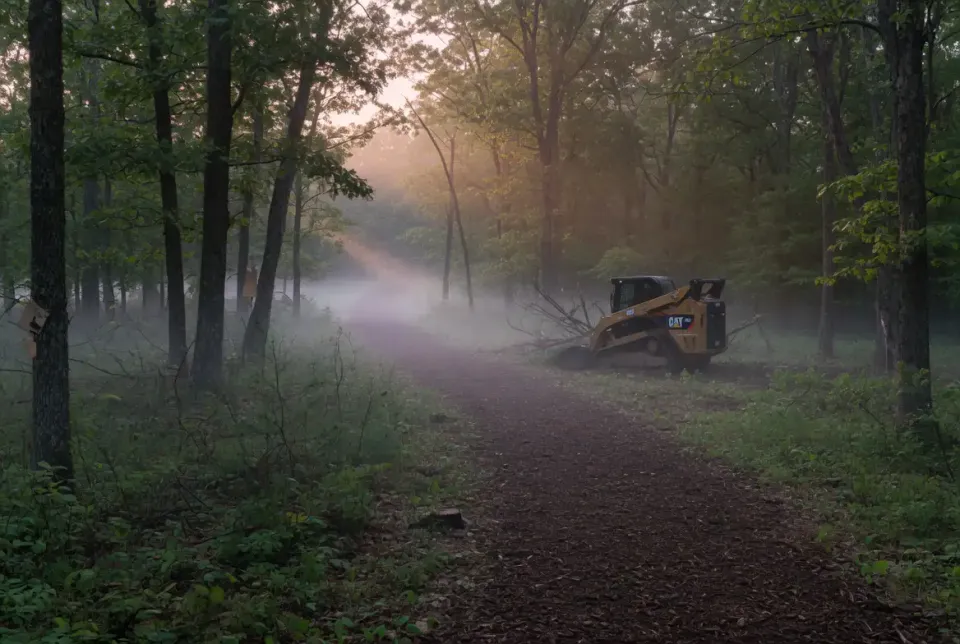
Brush, saplings, buckthorn, fence lines, field edges, cabin routes, recreational access, and overgrown rural acreage across Marinette County, Oconto County, Brown County, and nearby Northeast Wisconsin counties.
Forestry mulching / Fence lines and field edges / Buckthorn removal / Cabin and recreational access
View Wisconsin services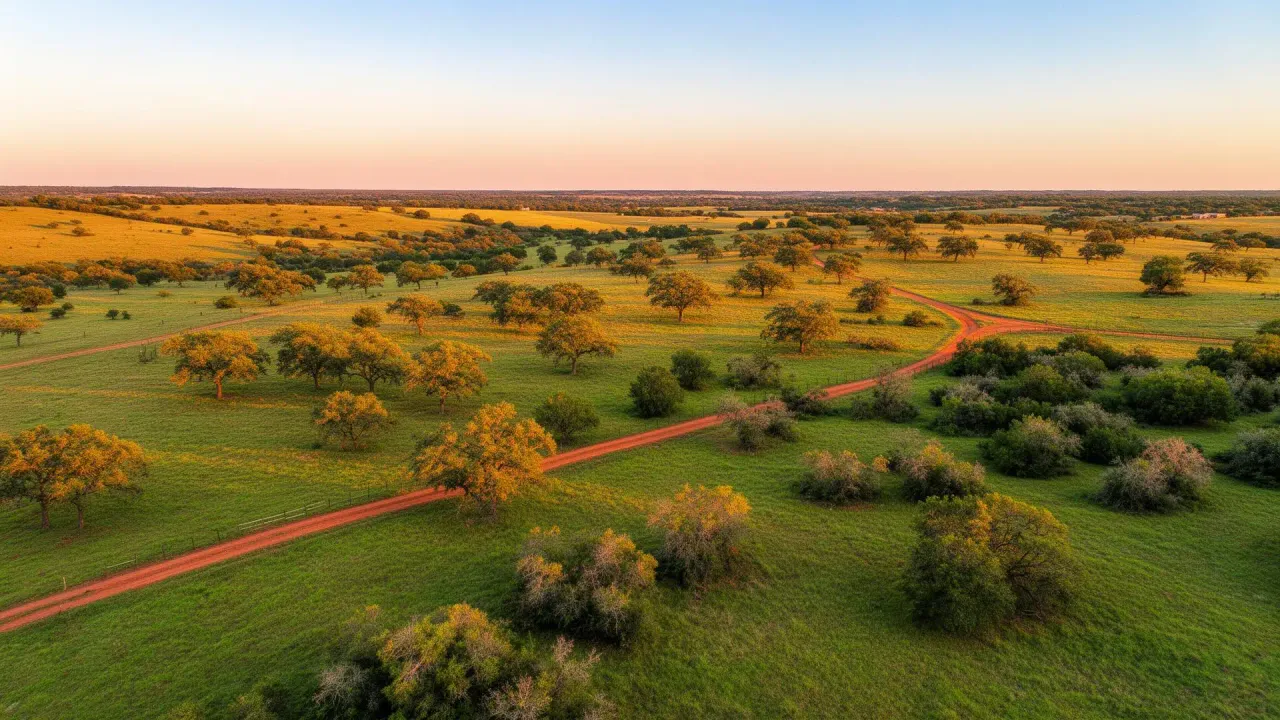
Pasture reclamation, fence lines, ranch cleanup, senderos, brush, saplings, and rural acreage work around Sulphur Springs, Hopkins County, West Hopkins, Brashear, Cumby, Miller Grove, and nearby East Texas properties.
Pasture reclamation / Fence line clearing / Ranch acreage / Senderos
View Texas servicesTHE PRACTICAL FIX
Pasture edges, fence lines, trails, and wooded sections get swallowed a season at a time. Forestry mulching cuts that brush and sapling growth in place, leaving a cleaner ground layer you can walk, mow, fence, hunt, or maintain.
Real job proof
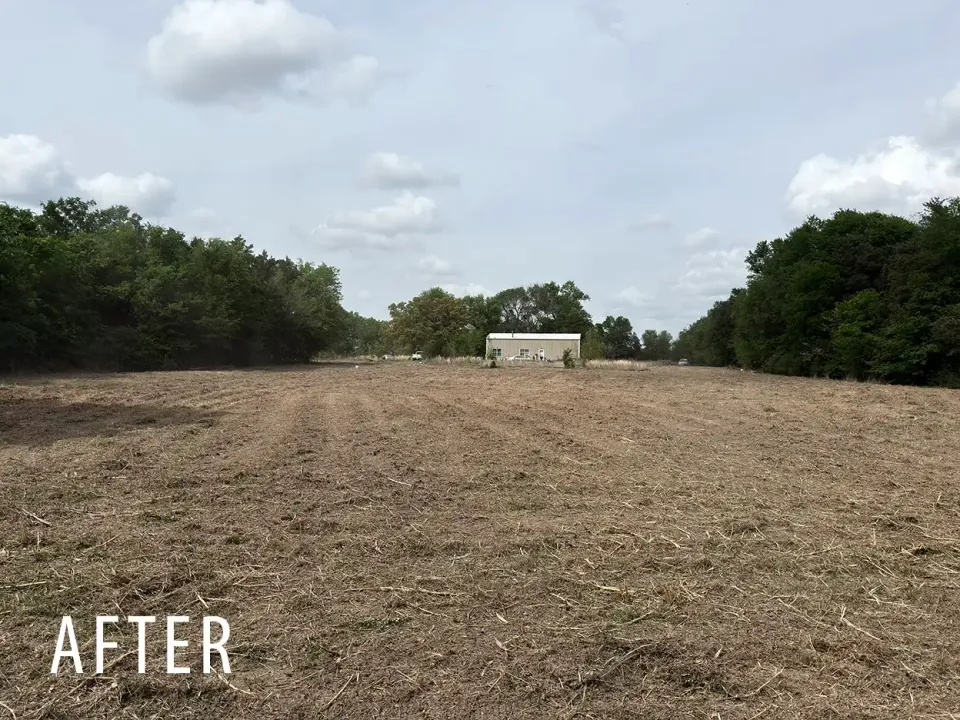
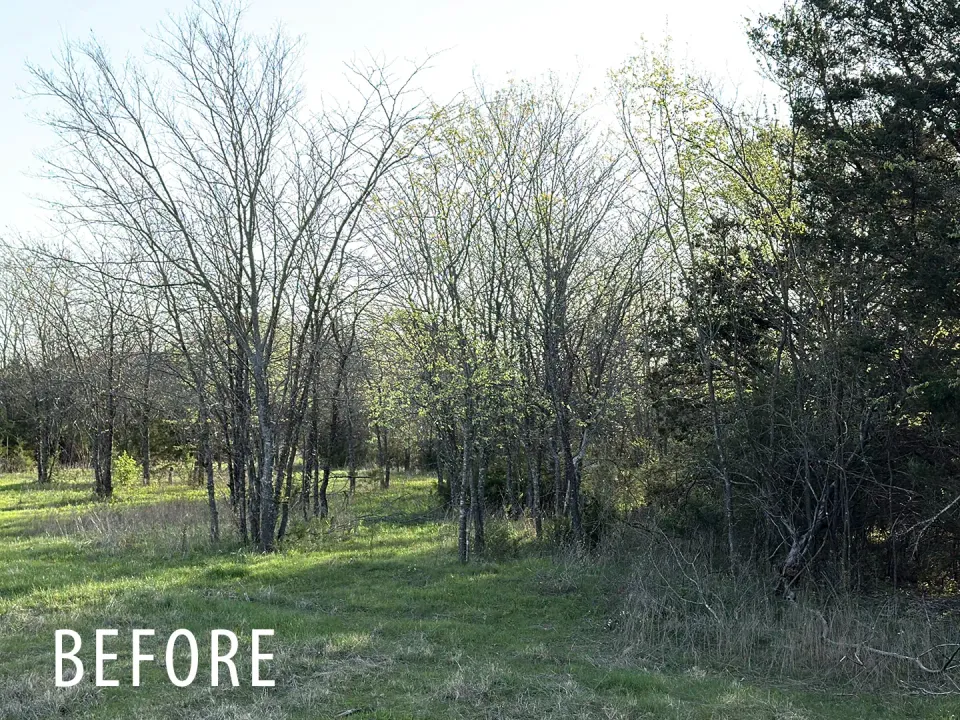
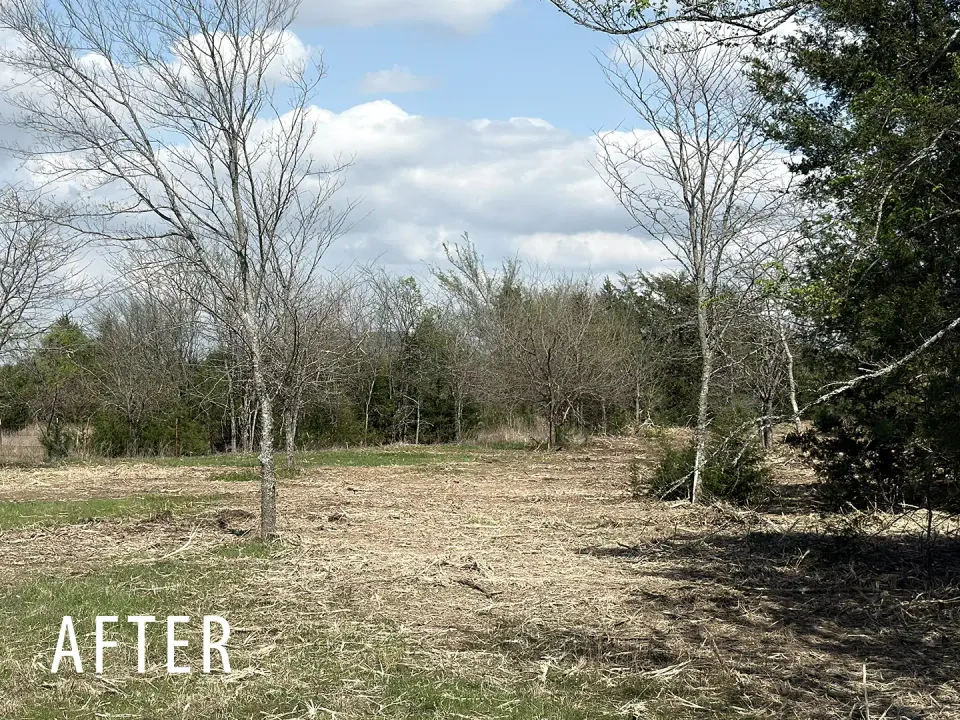
Dense brush gets opened into cleaner sightlines, easier access, and mulch left in place instead of piles to burn or haul away.
Field edge opened back up with brush and small growth mulched in place.
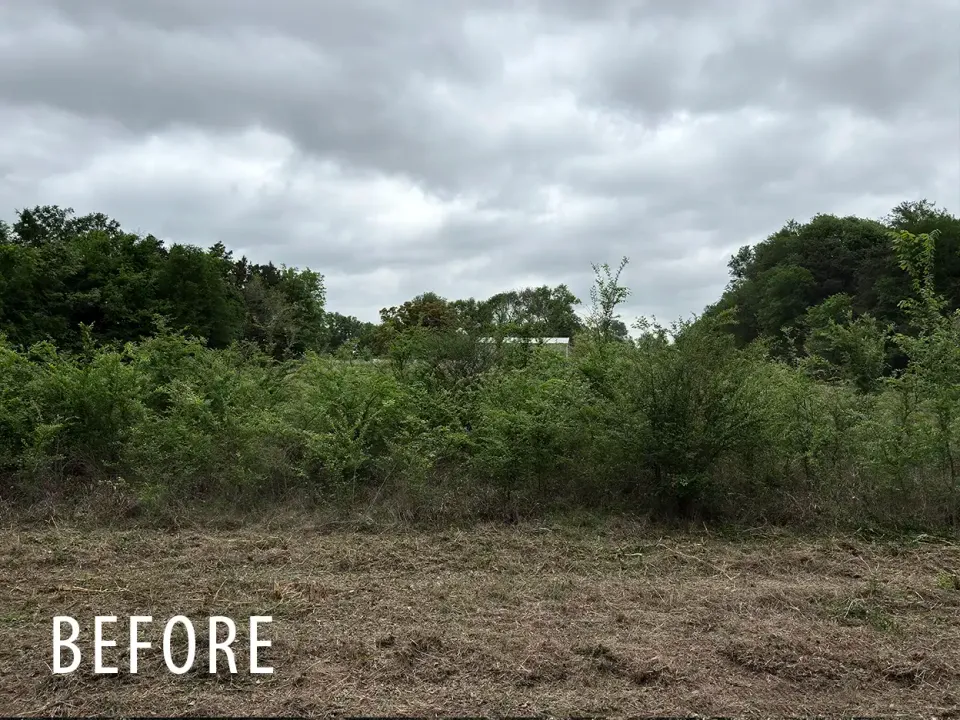
Underbrush was cut down so the trees remain, but the ground is easier to walk and maintain.
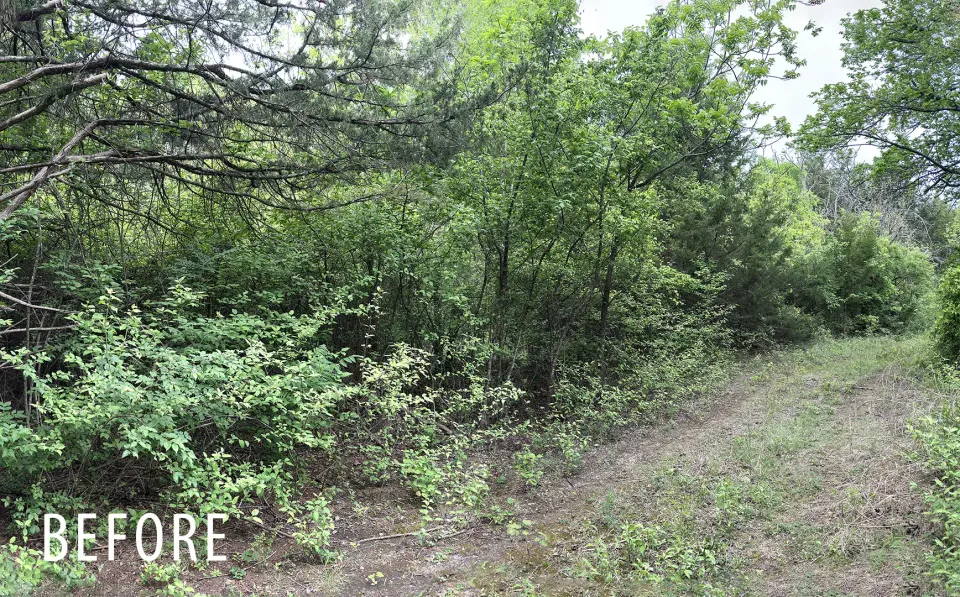
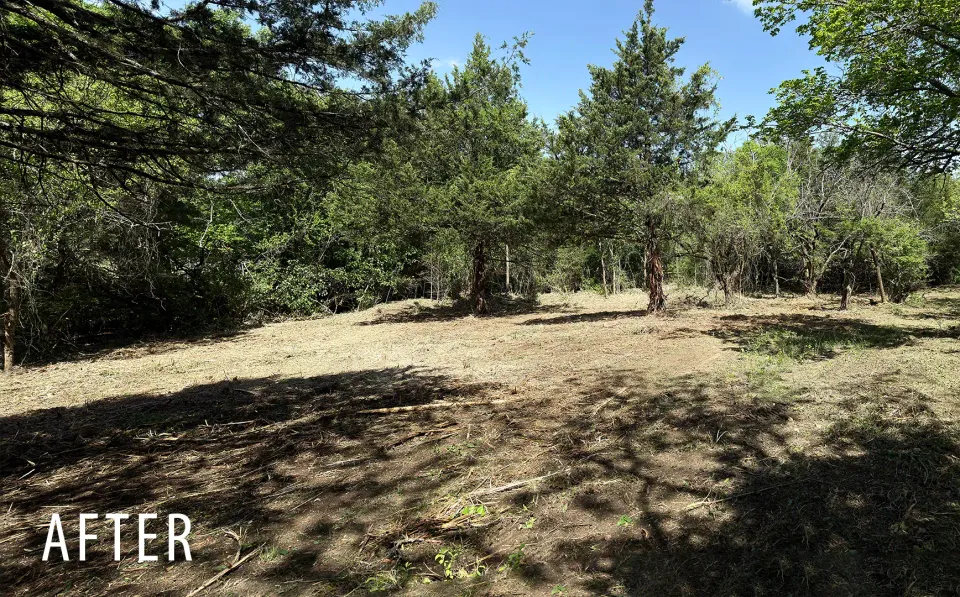
A grown-in fence line was opened up while keeping the larger trees in place.
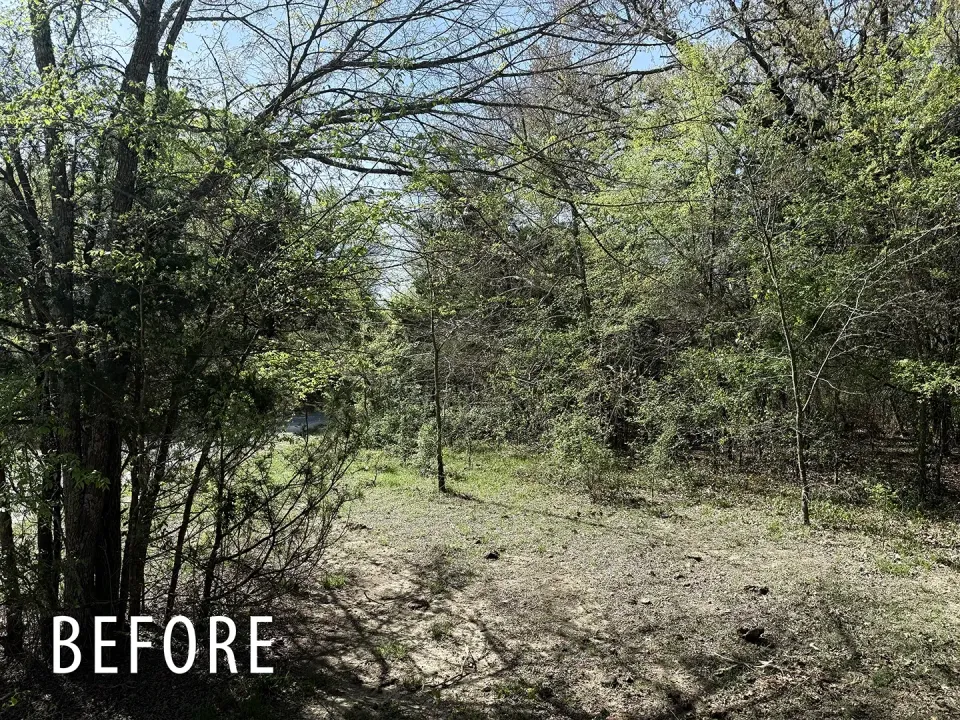
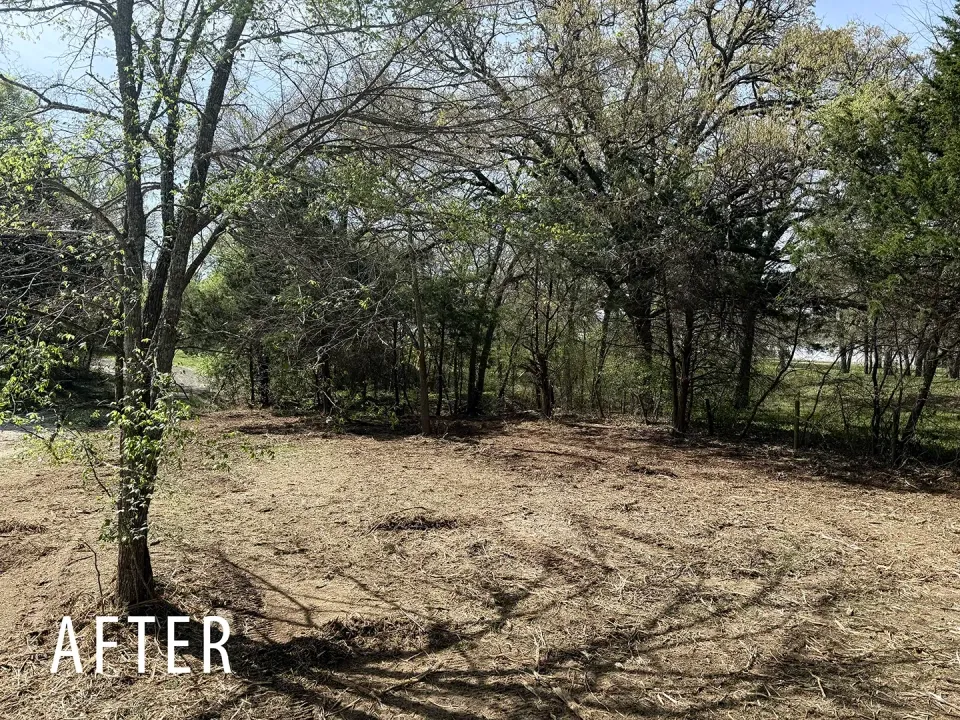
Heavy understory was reduced so the area has clearer sightlines and better access.
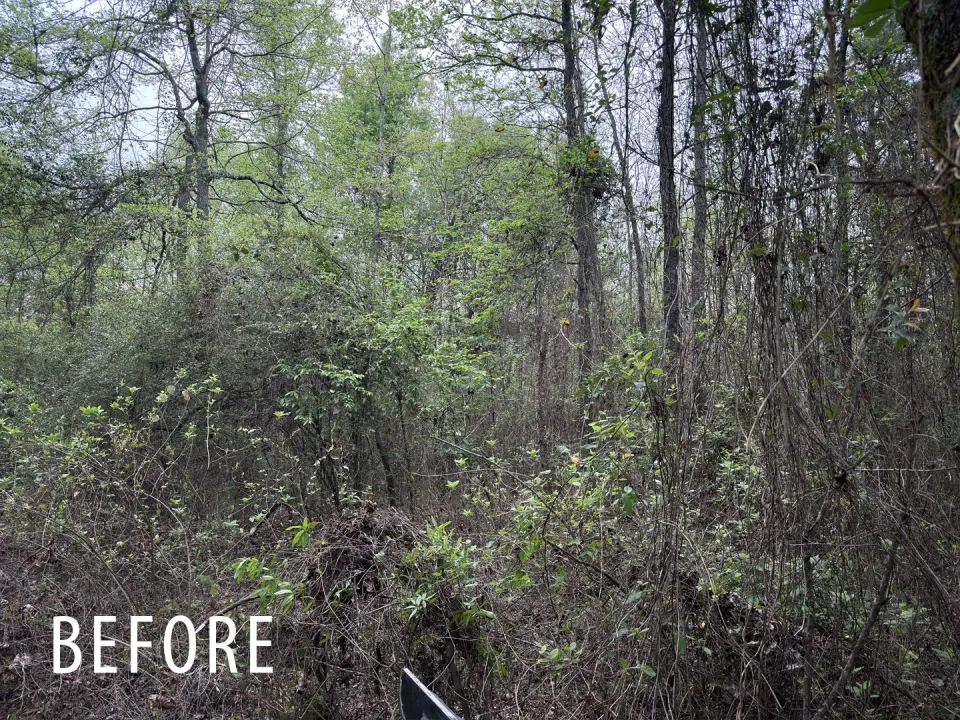
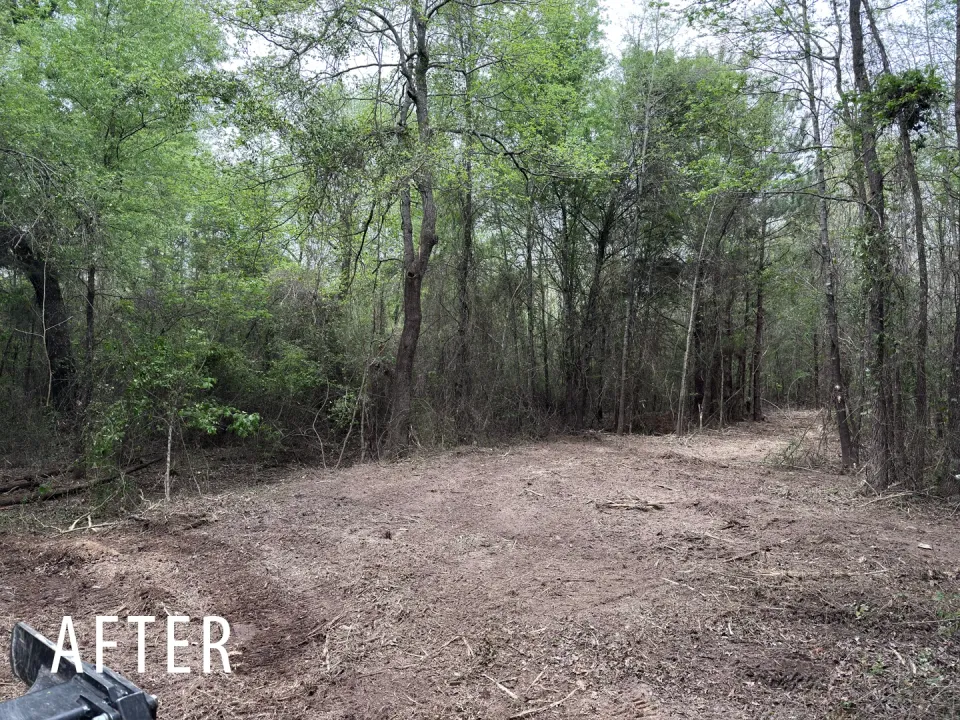
Lower brush was cleaned up under mature trees without scraping the area bare.
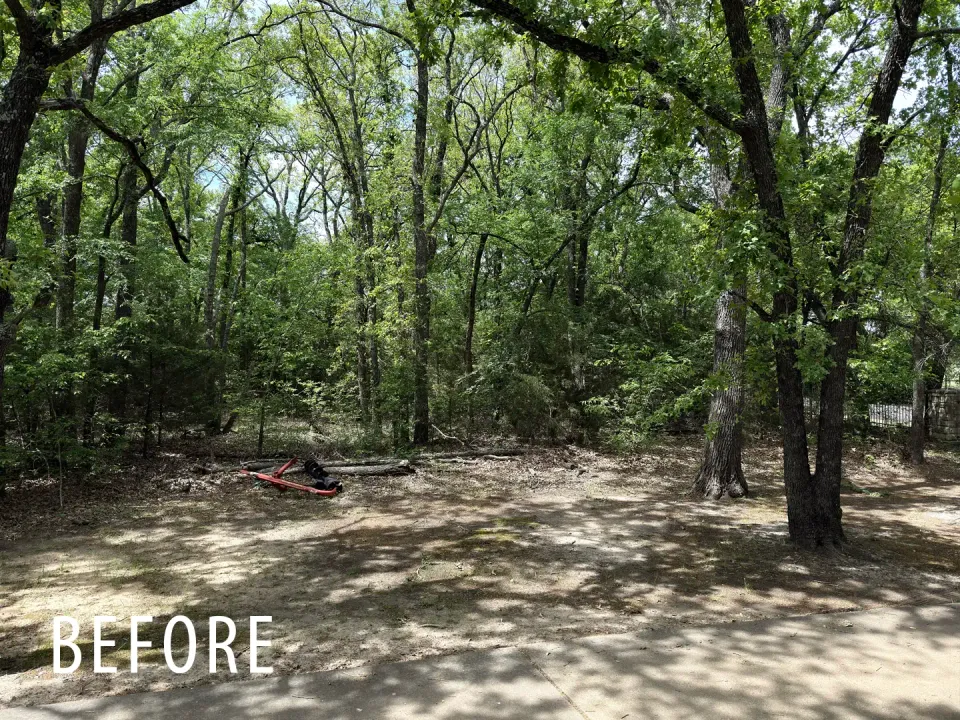
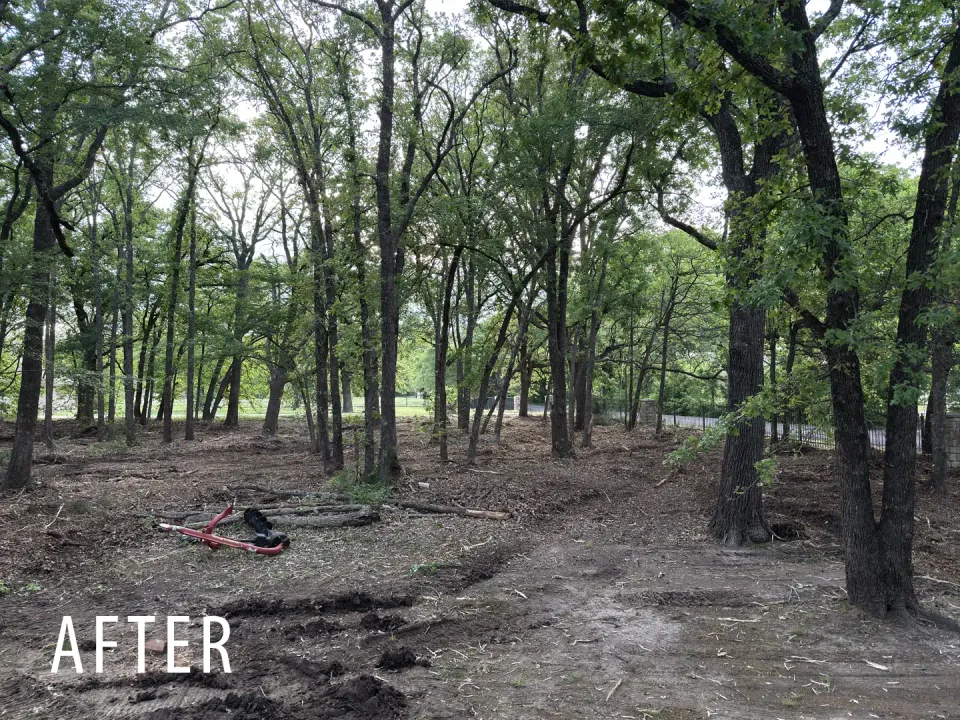
Brush around an acreage edge was opened where there was room to work.
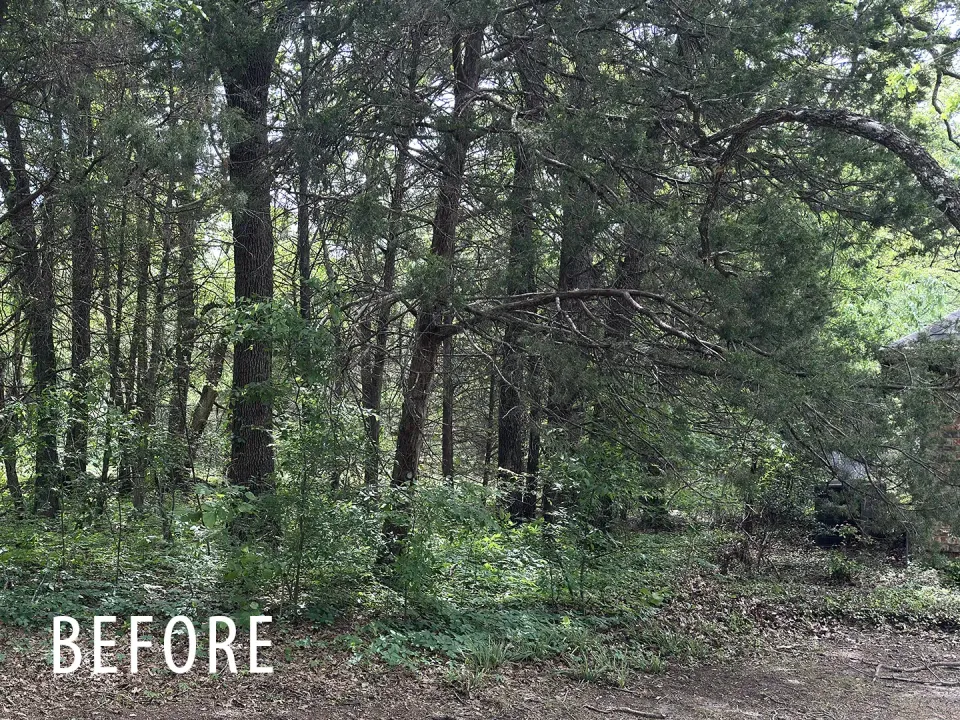
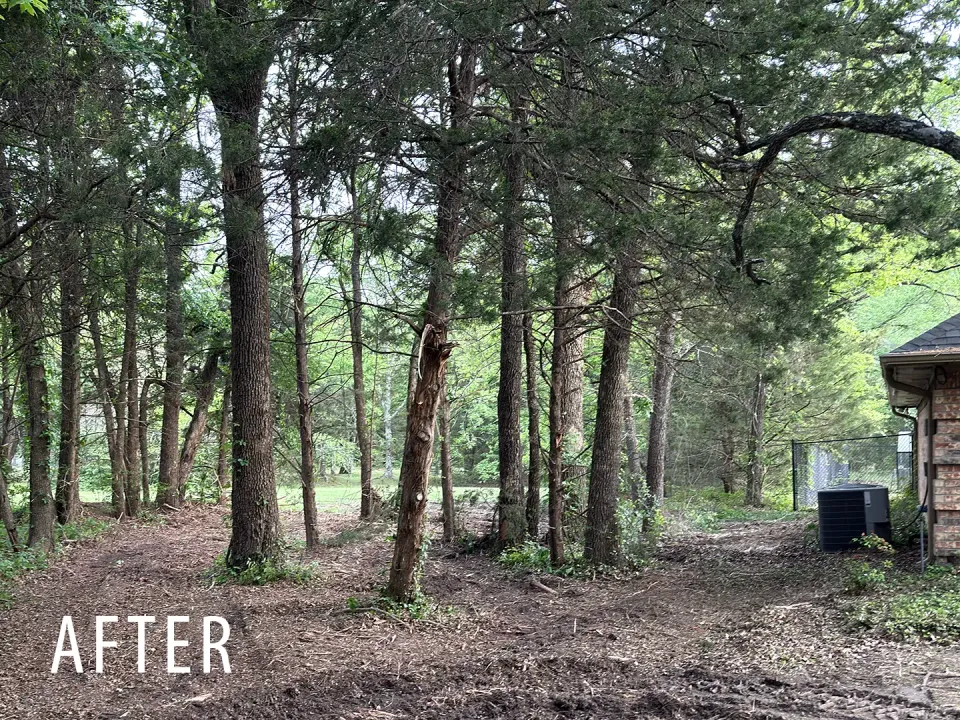
Fence and property edges are easier to see, reach, and maintain after the brush is mulched.
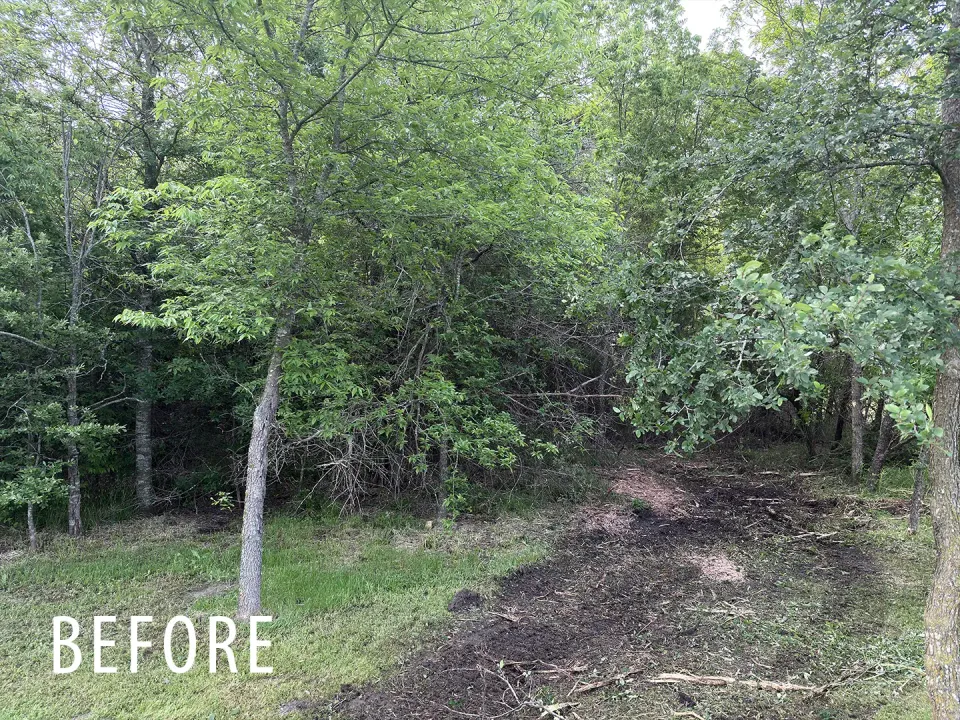
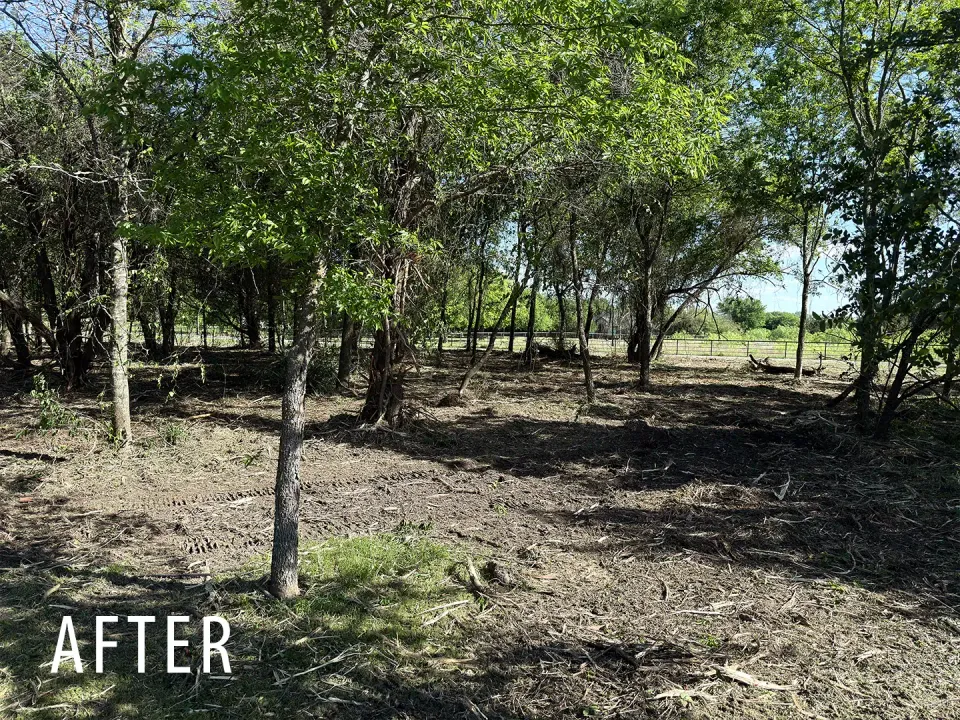
Field edges can be pushed back without hauling brush or leaving burn piles.
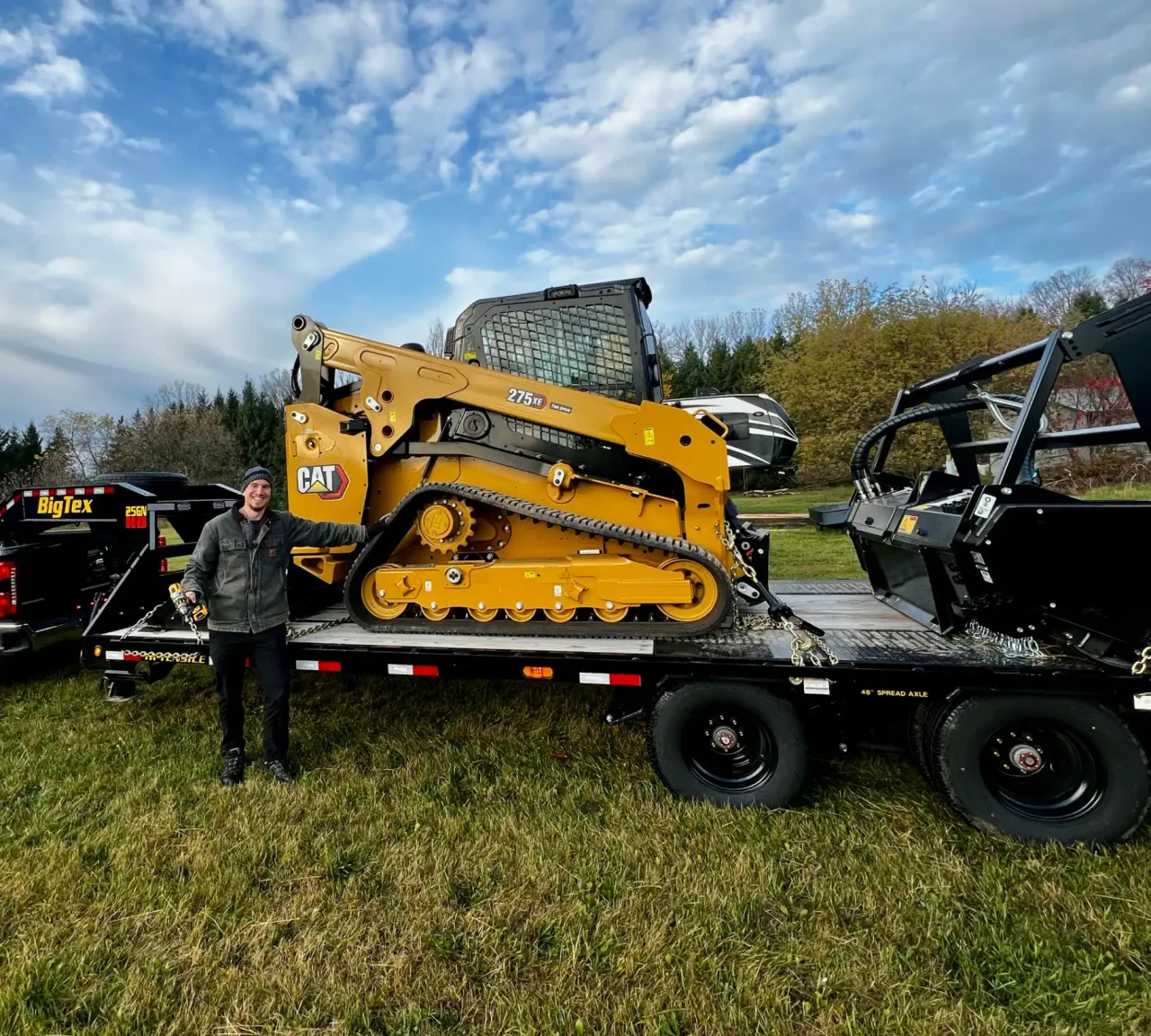
The equipment
Pasture reclamation, fence line recovery, acreage brush cleanup, overgrown field edges, access routes, and rural property cleanup.
Small residential yards, stump grinding only, excavation or grading, and large tree removal. Soft, swampy, wetland, or shoreline areas need a closer look before equipment is scheduled.
Plain Language
Landowners describe this work a lot of different ways: clearing small trees, cutting back thorny brush, opening up woods, cleaning up underbrush, removing buckthorn, pushing back field edges, clearing vines, opening fence lines, or making land walkable again.
If the problem is brush, saplings, buckthorn, vines, or thick lower growth with enough room for equipment, forestry mulching may be the right tool. Large tree removal, stump pulling, excavation, grading, and tight backyard work usually need a different contractor. Soft, low, wet, or shoreline areas need to be looked at in person before I say what can realistically be done.
Pricing without the runaround
The Instant Calculator gives you a realistic planning range based on acreage, brush density, terrain, access, and travel. It is not a final quote - it helps you see whether the job is in the right ballpark before we schedule a site walk.
Starting at
$1,200
Larger, denser, rougher, or more remote jobs can price higher. Official written quotes are confirmed after an in-person site walk, access check, and confirmed scope.