HUNTING PROPERTY ACCESS
Open marked routes into stands, back corners, and overgrown areas where brush has closed in.

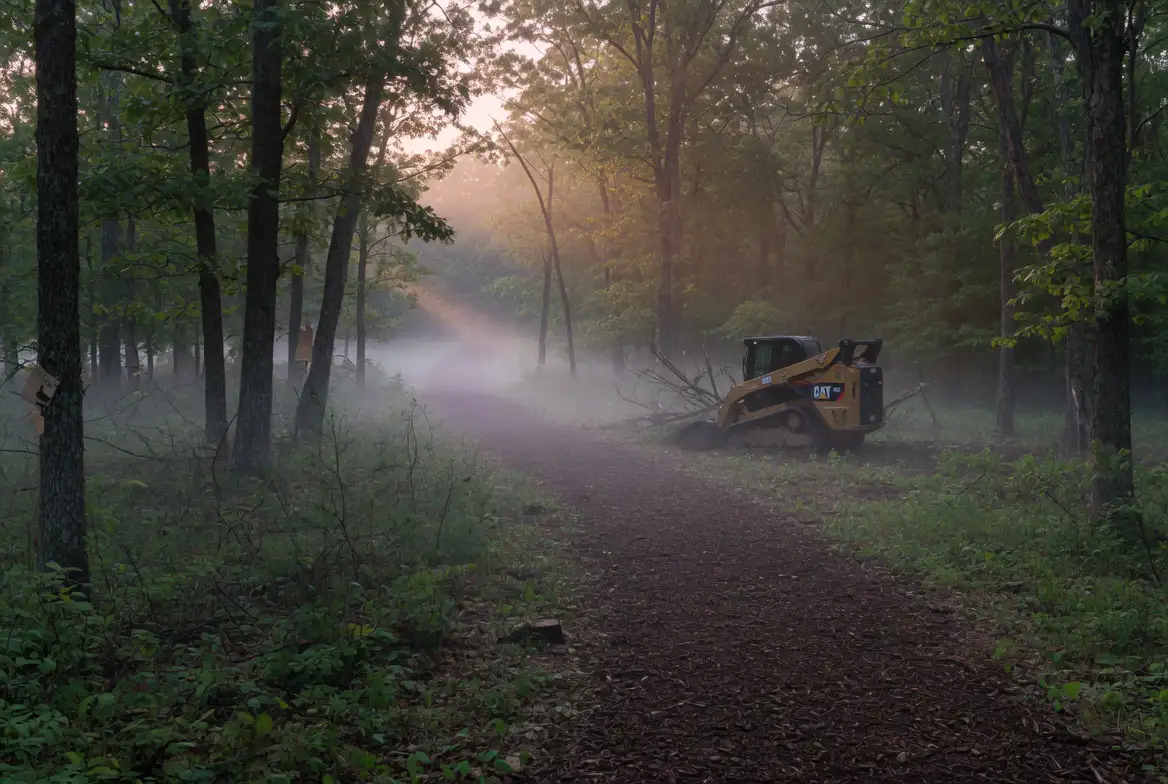
HUNTING LAND & RECREATIONAL ACCESS
Open overgrown trails, stand approaches, food plot edges, shooting lanes, cabin routes, and recreational acreage where there is enough room to work safely.
Forestry mulching grinds brush, saplings, buckthorn, vines, and thick understory into mulch where they stand, without burn piles or routine brush hauling and with less ground disturbance than traditional clearing. This service is best for larger, clearly marked access routes and overgrown areas with clear boundaries and enough room to work safely.
Based in Coleman, Wisconsin and serving hunting land, cabin, and recreational acreage projects across Northeast Wisconsin.
MAKE ACCESS USABLE AGAIN
Brush and saplings can make a good property frustrating fast. Trails close in. Stand approaches get noisy. Food plot edges, shooting lanes, cabin routes, and field edges grow into brush. Areas that should be useful become hard to reach, hard to maintain, and easy to ignore.
Forestry mulching grinds brush, saplings, buckthorn, vines, and thick understory in place. The finished area is more open, easier to walk, and easier to maintain without leaving a brush pile behind.
COMMON PROJECTS
This service is best for hunting property clearing, recreational land clearing, and larger access projects with clear boundaries and workable access, with enough overgrowth to make a dedicated clearing project worthwhile.
Open marked routes into stands, back corners, and overgrown areas where brush has closed in.
Push back overgrowth around food plots, openings, and field edges so the area is easier to access and maintain.
Clear larger, marked lanes and stand approaches as part of broader hunting-property access work. Small hand-clearing or very short trail work may need a different approach.
Open routes for walking, ATVs, equipment access, or reaching stands with less brush in the way.
Knock back thick invasive brush that blocks movement and closes in the woods.
Open overgrown areas around cabin land, vacant parcels, and recreational acreage.
WHY MULCHING WORKS
Traditional clearing can leave brush piles, ruts, and material that still has to be burned or hauled. Forestry mulching processes the brush on site and leaves a mulch layer behind.
For hunting, cabin, and recreational land, that means cleaner dry access, better visibility around trails and openings, and less material to deal with after the work is finished.
WHAT THIS SERVICE IS BUILT FOR
Forestry mulching works best when the target is brush, saplings, buckthorn, vines, field edges, overgrown trails, access corridors, or food plot approaches. The work area needs marked boundaries and enough room to work safely.
Wet swamp trails, cedar swamp, muck, and shoreland areas must be evaluated in person, and many need a different approach. Mature timber removal, stump pulling, logging, excavation, grading, debris hauling, and very short hand-clearing work usually need a different contractor or a different plan.
PLAIN LANGUAGE
You do not need to know the perfect service name. Most landowners just know the trail closed in, the stand approach is too noisy, the food plot edge is growing into brush, or the woods are too thick to move through.
Forestry mulching works best when the area is clearly marked, reachable, and large enough for a dedicated clearing project. It is suited to brush, saplings, buckthorn, vines, field edges, access routes, and overgrown openings.
Wet swamp trails and cedar swamp ground need a close look and may need a different approach. Mature tree removal, stump pulling, logging, excavation, and very small hand-clearing jobs usually need a different contractor or a different plan.
When requesting a quote, share the property location and note whether any part of the route is soft, low, wet, or near a creek, pond, marsh, or shoreline. A marked map is helpful when already available.
PROCESS
Call or use the quote form with the property location and a description of the trails, lanes, edges, or other areas you want opened up. A dropped pin or marked map can help when already available, but is not required to start.
An in-person site walk confirms access, ground conditions, boundaries, trees to keep, obstacles, and the finished result you want.
After the site walk, you receive a written quote with the scope clearly defined. The calculator can help with rough planning, but final pricing comes after the property is walked in person.
Pricing without the runaround
The Instant Calculator gives you a realistic planning range based on acreage, brush density, terrain, access, and travel. It is not a final quote — it helps you see whether the job is in the right ballpark before we schedule a site walk.
Need a rough planning number? Use the Instant Price Calculator.
Starting at
$1,200
Larger, denser, rougher, or more remote jobs can price higher. Official written quotes are confirmed after an in-person site walk, access check, and confirmed scope.
FAQ
Yes, when the lane is clearly marked, accessible, and wide enough for forestry mulching. It can mulch brush, saplings, buckthorn, vines, and small woody growth to open larger access corridors and travel routes. Boundary lines, stand locations, and areas to avoid should be marked before work begins.
Yes, if the shooting lanes are larger, marked, reachable by equipment, and part of a broader hunting-land or recreational acreage project. Small hand-clearing, very short trail work, and wet lanes usually need a different approach.
Yes. Forestry mulching can push back brush and saplings around food plots, field edges, trails, and openings so the area is easier to access and maintain. It does not replace tilling, planting, or full food plot installation.
Yes, for marked access routes with adequate working room and enough scope for a professional clearing project. A marked route or map can help define the work before an in-person site walk.
Wet hunting ground, swamp trails, cedar swamp, muck, shoreland, and soft lowland must be evaluated in person. Some edges may be workable with the right timing, but many of these areas need a different approach or a different contractor.
No. This service is for brush, saplings, buckthorn, invasive understory, trails, field edges, and light-to-medium overgrowth. Large tree removal, commercial logging, stump pulling, excavation, and grading require different equipment.
Call or use the quote form with the property location and a description of what you want opened up. An in-person site walk is used to review access, ground conditions, and scope before a final written quote is provided.
Yes. Mark trails, larger lanes, stand approaches, boundaries, trees to keep, and areas to avoid before the site walk. Clear markings help define the scope and keep final written pricing tied to the actual work area.
SERVICE AREA
Truax Land Clearing is based in Coleman, Wisconsin and serves marked hunting land, cabin routes, trails, food plot edges, and recreational acreage projects across nearby parts of Northeast Wisconsin, including Crivitz, Lakewood, Peshtigo, Oconto Falls, Abrams, Coleman, Pound, and nearby rural communities.
READY TO OPEN UP HUNTING OR RECREATIONAL LAND?
Share the property location and describe the trails, lanes, edges, or other areas you want opened up. A site walk confirms access, boundaries, and ground conditions before the final written quote.