BUCKTHORN AND UNDERSTORY
Open thick lower growth while visibility is better and desirable trees are easier to work around.

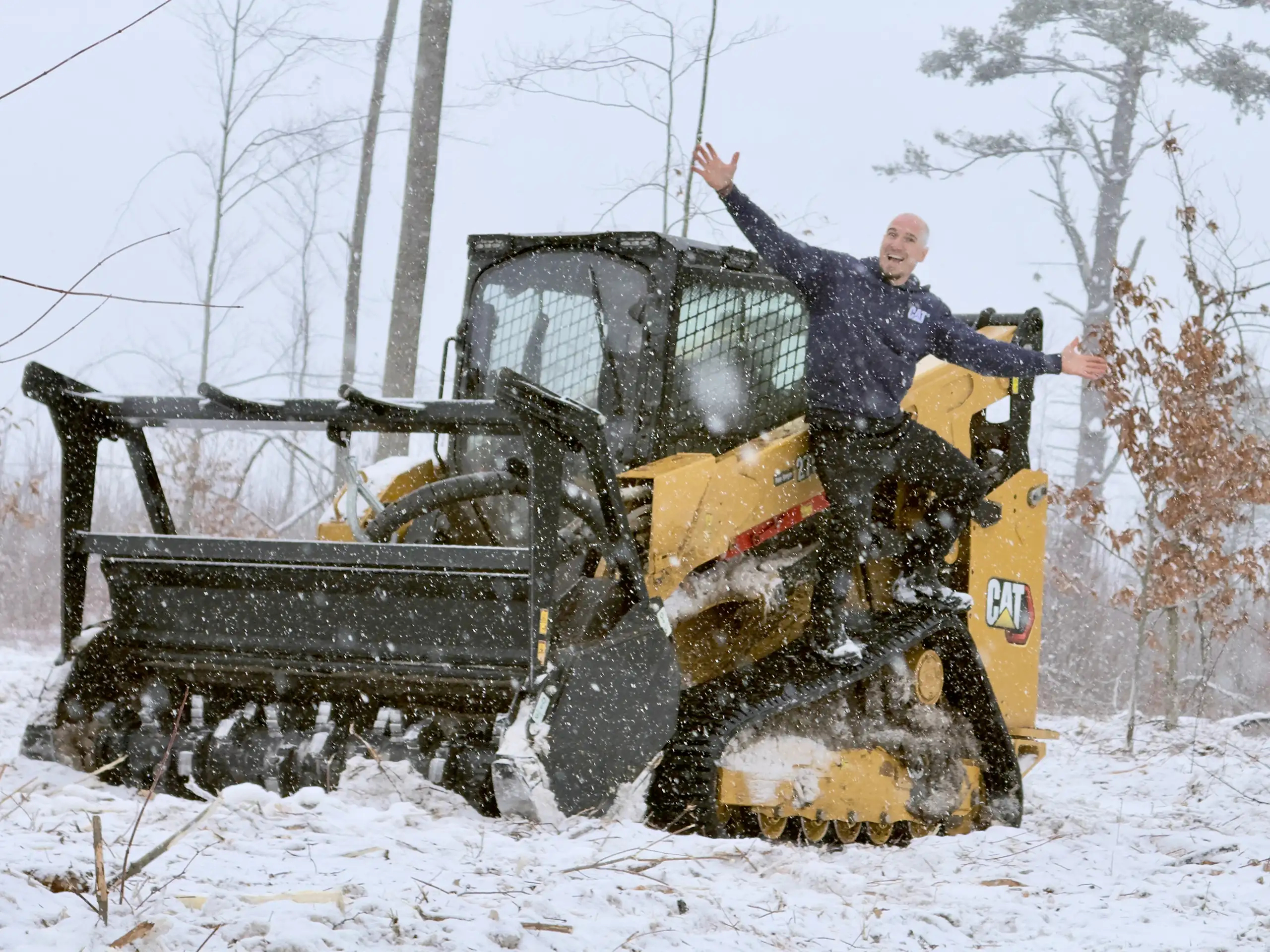
WINTER FORESTRY MULCHING IN NORTHEAST WISCONSIN
Clear brush, saplings, buckthorn, field edges, fence lines, and rural access areas when frozen ground conditions make the work cleaner and more practical.
Winter can be one of the best times to reclaim overgrown Wisconsin property. When the ground is properly frozen, forestry mulching can open brushy areas with less rutting, better visibility, and fewer conflicts with summer growth. Truax Land Clearing uses a CAT 275 XE compact track loader with a forestry mulcher to clear the right winter projects without burn piles or hauled-off brush.
FROZEN-GROUND TIMING
Useful when winter conditions support the machine.
BRUSH AND SAPLINGS
Built for woody overgrowth, buckthorn, and understory.
NO BURN PILES
Vegetation is mulched in place.
OWNER-OPERATED
The guy quoting the work runs the machine.
WHY WINTER WORKS
Wisconsin summers can be busy, wet, and overgrown. By winter, the leaves are down, visibility is better, and some sites have firmer access because the ground has frozen. That can make it easier to see fence lines, property edges, trails, buckthorn, saplings, and the areas that need to be opened up.
Winter forestry mulching is not about forcing equipment into bad ground. It is about using the season when conditions are right. A good winter project still needs safe access, clear boundaries, and enough firm ground for the machine to work without tearing up the site.
COMMON WINTER PROJECTS
Winter clearing is best for landowners who want brush and overgrowth handled before spring growth returns. The best projects are already planned, marked, and accessible enough for equipment.
Open thick lower growth while visibility is better and desirable trees are easier to work around.
Push back brush and saplings along rural edges, fence rows, and old pasture margins.
Open dry or frozen access routes on cabin property, recreational land, and rural acreage.
Clean up overgrown areas before spring use, listing season, or summer property projects.
WHAT WINTER HELPS WITH
When conditions are right, winter can reduce rutting, improve visibility, and make certain brush projects easier to stage. It can also be a practical time to clear areas that are difficult to schedule during the busy growing season.
But winter does not make every property a forestry mulching project. Snow can hide rocks, wire, stumps, debris, and uneven ground. Soft lowlands can still be unsafe. Wetland, swamp, cedar swamp, shoreland, muck, stump pulling, grading, excavation, and mature tree removal are still not the right use of this machine.
PLAIN LANGUAGE
Some Wisconsin properties are easier to evaluate and clear when the leaves are down and the ground is frozen. Landowners usually notice the problem earlier: fence lines disappear, buckthorn fills the understory, access trails close in, or the old field edge gets too thick to mow.
Winter forestry mulching can be useful when the project is already dry or safely frozen, the boundaries are marked, and the work is brush, saplings, buckthorn, field edges, or access routes.
Winter does not turn every wet property into a good mulching job. Wetland, swamp, cedar swamp, muck, shoreland, large stumps, mature tree removal, excavation, and grading are still not the right use of this machine.
If snow will hide rocks, wire, stumps, debris, or wet ground, send photos and a marked map before scheduling a walk.
PROCESS
Use the quote form to send the property location, photos, and a short description of the area you want cleared. A map pin, parcel map, or marked screenshot helps.
If the project looks like a possible match for forestry mulching, we walk the site to review access, ground conditions, boundaries, trees to keep, hidden obstacles, and the finished result you want.
After the site walk, you receive a written quote with the scope clearly defined. Photos and the calculator can help with planning, but final pricing comes after the property is walked in person.
Winter projects are easier to quote before deep snow covers the ground. Marking boundaries, trails, stumps, rocks, gates, and areas to avoid helps keep the work clean and efficient.
Pricing without the runaround
The Instant Calculator gives you a realistic planning range based on acreage, brush density, terrain, access, and travel. It is not a final quote — it helps you see whether the job is in the right ballpark before we schedule a site walk.
Need a rough planning number? Use the Instant Price Calculator.
Starting at
$1,200
Larger, denser, rougher, or more remote jobs can price higher. Official written quotes are confirmed after an in-person site walk, access check, and confirmed scope.
FAQ
Yes, for the right property. Frozen ground, leaf-off visibility, and lower summer vegetation can make winter a good time to clear brush, saplings, buckthorn, field edges, trails, and rural access areas. The site still needs safe access and suitable ground conditions.
No. Winter does not make every lowland, wetland, swamp, cedar swamp, muck, or shoreland area acceptable. Those projects require careful review and are often not a fit for this machine.
Mark property lines, trails, gates, rocks, stumps, old wire, wells, septic areas, utilities, trees to keep, and areas to avoid. Snow can hide hazards, so clear marking matters.
No. This service is for brush, saplings, buckthorn, invasive understory, field edges, trails, and light-to-medium overgrowth. Large tree removal, stump pulling, excavation, grading, and building pad prep require different equipment.
Start with the quote form and include the property location, photos, and a short description of what you want cleared. If forestry mulching looks like the right approach, an in-person site walk is scheduled before a final written quote is provided.
The best time to start is before deep snow hides the ground. Photos, a map pin, and marked boundaries help decide whether winter forestry mulching is worth walking in person.
SERVICE AREA
Truax Land Clearing is based in Coleman, Wisconsin and serves winter forestry mulching projects across nearby parts of Northeast Wisconsin when ground conditions, access, and project scope are right.
Common winter work includes dry cabin, trail, brush, and access projects around Crivitz, Lakewood, Peshtigo, and Abrams when frozen-ground conditions are right.
READY TO PLAN A WINTER CLEARING PROJECT?
Send the property location, photos, and a short description of the area you want cleared. Truax Land Clearing will review the project and follow up if winter forestry mulching looks like the right approach.